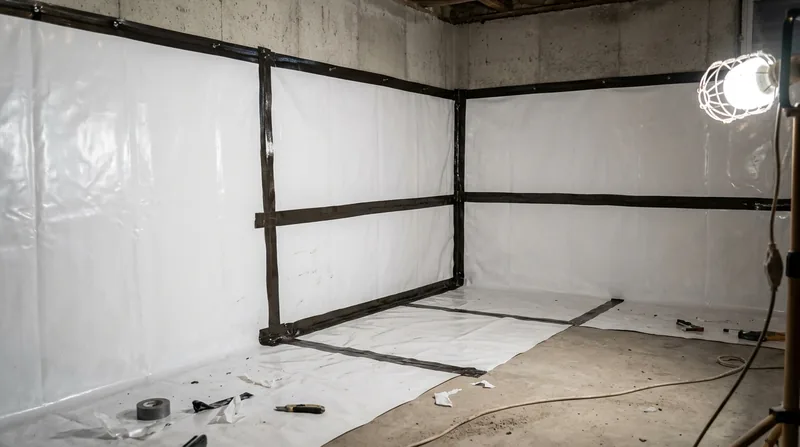




Vapor Barrier Installation in Rapid City: Stop Ground Moisture Before It Reaches Your Basement
Rapid City sits where the Black Hills meet the plains, and that geology drives everything below grade. Your foundation rests on expansive bentonite clay over Pierre Shale, and that clay swells hard when it takes on spring snowmelt or a summer cloudburst. Vapor Barrier Installation in Rapid City addresses the moisture that moves as vapor through basement walls and slabs, not just the water you can see. We install heavy-duty barrier sheets with sealed seams and taped terminations, so damp clay soil stops feeding humidity into your lower level. Homeowners near Sheridan Lake Road and in the Red Rocks foothill subdivisions deal with the same problem as the 1920s bungalows near downtown: ground vapor finds a path. If you want the full picture of how this fits with drainage and wall work, start with our basement waterproofing overview.
Why Vapor Barrier Installation Matters in Rapid City's Bentonite Clay and Foothill Housing Stock
Bentonite clay does not just push water sideways against your walls. It holds moisture against the foundation for weeks after the snow melts off the foothills, and that moisture migrates through concrete and masonry as vapor. In the West Boulevard historic district, sandstone and brick foundations from the 1890s to 1920s were never built with a modern vapor barrier, and the musty basement smell is the first sign. In the 1950s to 1970s ranches of South Rapid and Robbinsdale, the slab and lower-level walls wick ground moisture year round.
- Efflorescence on the wall face tells you soluble salts are riding moisture through the concrete.
- Persistent musty basement smell points to vapor load, even when no standing water shows up.
- Damp slab edges and peeling floor coatings signal moisture rising from below.
- Hard freeze-thaw cycles in Rapid City open hairline paths that let vapor move faster each spring.
We test the source before we quote anything, because a vapor problem and a hydrostatic pressure problem need different fixes.
Key info: A 1958 ranch in Robbinsdale had efflorescence across the lower wall and a musty smell every June. No crack leaked. The moisture was vapor through the wall from saturated bentonite clay, and a sealed vapor barrier with taped terminations dried the space without excavation.
For the official word on what work needs a permit in this jurisdiction, check the City of Rapid City building services pages before you schedule anything structural.
How We Install Vapor Barriers on Rapid City Basement Walls and Slabs
We start by walking the basement and grading the exterior, because a barrier over a wet wall traps the problem instead of solving it. If we find active seepage or hydrostatic pressure at the cove joint, we say so and recommend the right system, often an interior drain tile system before any barrier goes up. When the wall is damp but not leaking, the barrier is the correct answer and we install it in a fixed sequence.
- We clean the wall and slab, remove loose parging, and let the surface dry to a workable condition.
- We measure and cut heavy-duty barrier sheets to fit wall height and slab runs without unnecessary seams.
- We fasten the sheet tight to the wall and run it down over the cove, terminating cleanly at the slab.
- We seal every seam with the specified tape and mastic, then tape all terminations and penetrations.
- We integrate the barrier with the sump basin rim and check that the discharge line and check valve stay clear.
- We inspect the finished run for gaps, then walk you through what the barrier does and what it does not do.
Every job ends with a moisture check and a plain explanation of the result, not a sales pitch.
Key info: On a walk-out poured-concrete basement stepping down a Red Rocks slope, snowmelt from the uphill pine lot kept the north wall damp all spring. We sealed the seams and tied the barrier into the existing sump basin, and the wall stayed dry through the next melt.
Vapor Barrier Approaches We Use in Rapid City Basements
The right approach depends on your foundation type, the moisture reading, and whether a drainage system is already in place. Here is how we match the method to the house.
| Approach | Description | Best for |
|---|---|---|
| Wall sheet barrier | Heavy-duty sheet fastened to the wall with sealed seams and taped edges. | Damp masonry and concrete walls with efflorescence but no active seepage. |
| Slab vapor barrier | Barrier laid over the slab with sealed overlaps and terminations at the cove. | Damp slab edges and moisture rising from bentonite clay below. |
| Barrier with sump integration | Wall and slab barrier tied into the sump basin rim and discharge path. | Basements with a sump pump or interior perimeter drain already in place. |
| Dimple board detail | Drainage mat behind the barrier to keep the wall face clear of trapped moisture. | Walls with persistent dampness where a drainage gap is needed. |
| Barrier plus wall sealing | Crack and surface sealing under the barrier to close vapor paths first. | Older sandstone and brick foundations in the historic district. |
We choose the approach after reading the moisture, not before, so the barrier you pay for matches the wall you have.
Vapor Barrier Installation Cost in Rapid City: What to Expect
Most basement vapor barrier work in Rapid City starts from $3 per square foot of treated wall and slab area, and the final number depends on the run length, the number of seams, and how much prep the wall needs. A clean poured wall in a 1990s Black Hawk home is a shorter job than a sandstone foundation near West Boulevard with failing parging that has to come off first. Sump integration, dimple board, and crack sealing add line items, and we price those separately so you see what each one buys.
The factors that move the price most are wall condition, access to the basement, the moisture reading, and whether drainage work is needed first. We recommend getting two or three estimates and comparing the scope line by line, not just the total. Our full pricing overview breaks down how each component is measured.
Choosing a Waterproofing Contractor Near Me in Rapid City: What Homeowners Should Check
Vapor barrier work is straightforward when it is done right and a waste of money when it is not, so vet the contractor before you sign. Ask for proof of licensing and insurance, and get a certificate of coverage sent to you directly. Get two or three written estimates with the scope spelled out, and call references from jobs in similar housing stock. If the work touches structural elements or alters drainage, confirm who pulls the permit with the local building department, since rules vary by jurisdiction. HOA requirements in the foothill subdivisions can also affect access and scheduling.
We are a Basement Health Association member and a dedicated below-grade specialist, not a general foundation firm or a plumber. Reach out through our contact page to schedule a free basement inspection and get a straight answer on whether a vapor barrier is the right fix for your wall.
Vapor Barrier Installation in Rapid City: Pricing Guide
| Service | Price | Details |
|---|---|---|
| Wall vapor barrier | Starting at $3/sq ft | Heavy-duty sheet, sealed seams, and taped terminations on prepared basement walls. |
| Slab vapor barrier | Starting at $3/sq ft | Barrier over the slab with sealed overlaps and clean cove terminations. |
| Barrier with sump integration | On estimate | Tied into the sump basin rim and discharge path; needs an on-site look first. |
| Barrier plus crack and wall sealing | On estimate | Prep and sealing under the barrier for older sandstone and brick foundations. |
| Travel | Included | in Rapid City and surrounding areas, no separate call-out or mileage fee |
| Estimate | Free | Response within 24h at (605) 600-7837, no obligation to book |
Indicative pricing, the exact cost depends on square footage, finish, and site access. Free personalized estimate within 24h at (605) 600-7837.


